West Dean is a brilliant craft college local to our workshops in Sussex. Experience the joy of making with their series of taster workshops and demonstrations in their London outpost, including tapestry weaving, bookbinding and automata making.
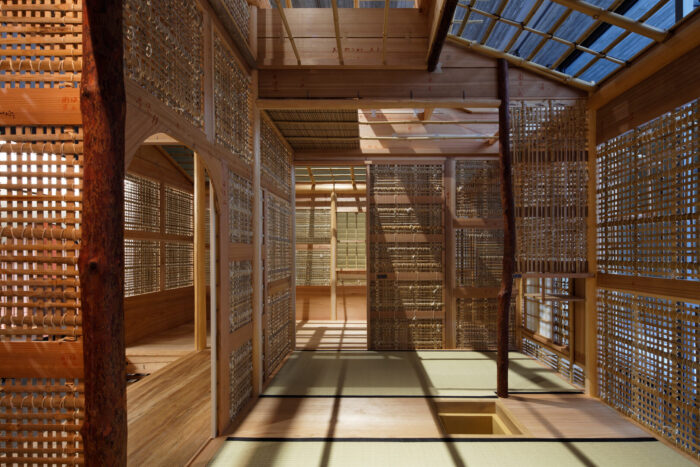
Learn about Japan’s master carpenters in the beautifully crafted Japan House, focusing on how they have developed tools and techniques over centuries informed by – and working with – the extraordinary qualities of wood.
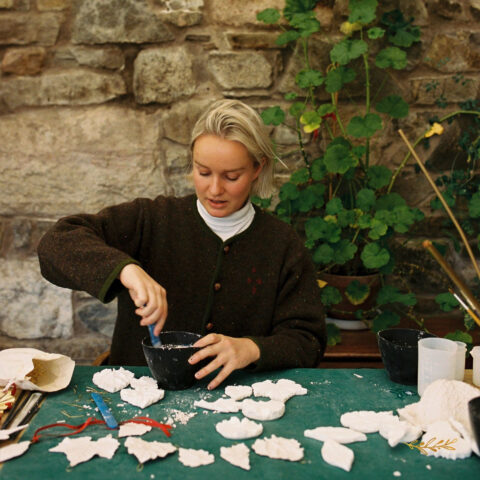
We love Jess’s ethereal decorative plasterwork. Join Jess and her team as they work on a large-scale sculpture, showcasing intricate techniques including plaster casting, metal shaping and patination, in the inspiring setting of the And Objects showroom.
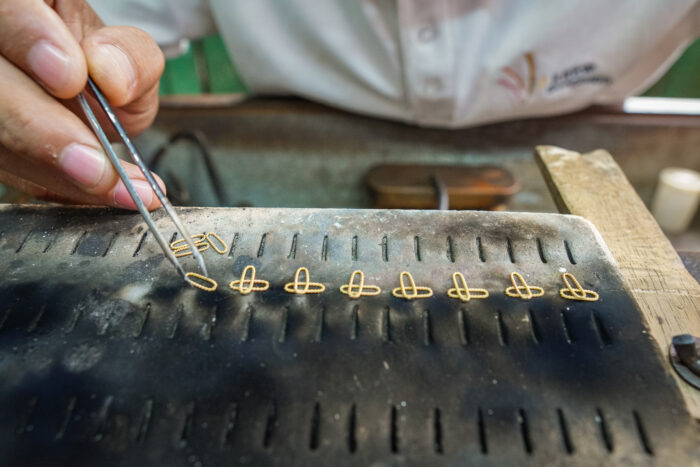
Turquoise Mountain is a charity partnering with craftspeople across the Middle East to preserve centuries-old skills and techniques. They are collaborating with artisans from Myanmar to display fine jewellery, lacquerware and textiles which embody Myanmar’s cultural heritage and legacy.
Cox London create beautifully sculptural chandeliers inspired by the delicate form of nature, which often sit in interiors alongside our own work. Visit their showroom throughout the week, and book into their panel discussion Why Craft Matters More Than Ever with Elizabeth Metcalfe (House & Garden), Daniel Carpenter (Heritage Crafts), Nicola Dewar (Crafts Council), and Ottalie Stride (Albion Nord).
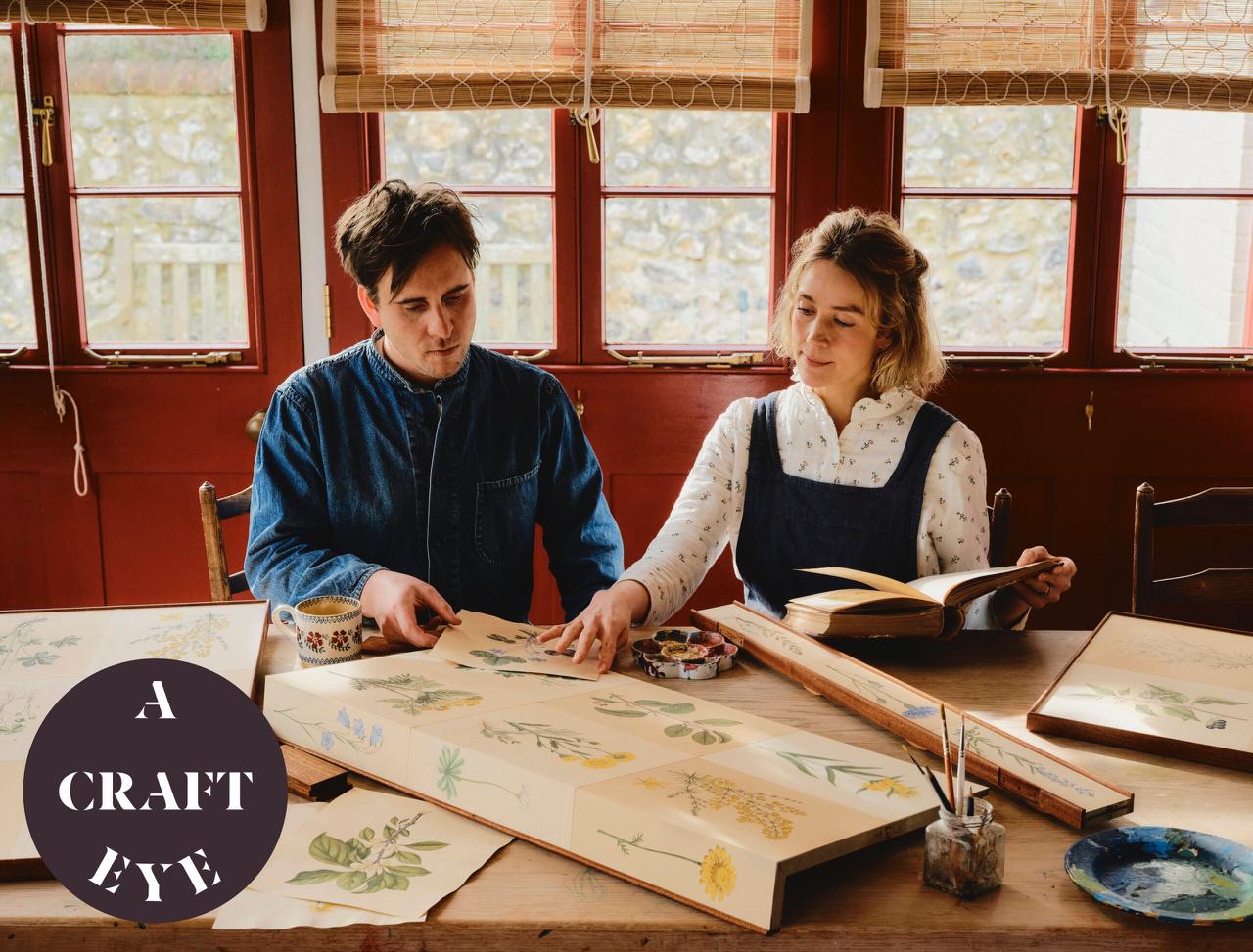
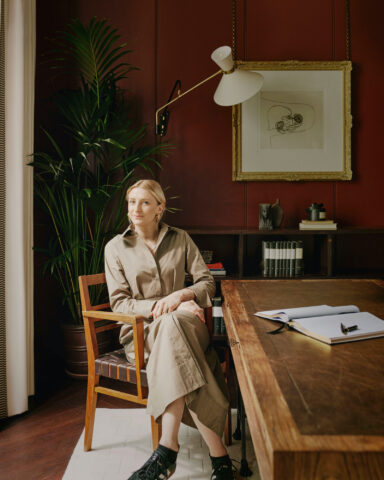
This London Craft Week, Tess & Alfred present their own show Herbarium Cabinet, in celebration of the traditional crafts integral to their work. From their workshops in East Sussex, they have crafted a piece that showcases the beauty and skill in handmade furniture. The cabinet is on display in the library of London’s historic Linnean Society, whose collections include those of Carl Linnaeus. Original botanical specimens from Linnaeus’ collection are exhibited alongside the piece, echoing the species of plant depicted on the cabinet. In addition, on Wednesday 14 May, Tess hosts a botanical drawing workshop with an introduction from a member of the Linnean Society’s collection team. Tickets are limited and can be purchased via Eventbrite.
Please tell us about the materials and techniques that you work with.
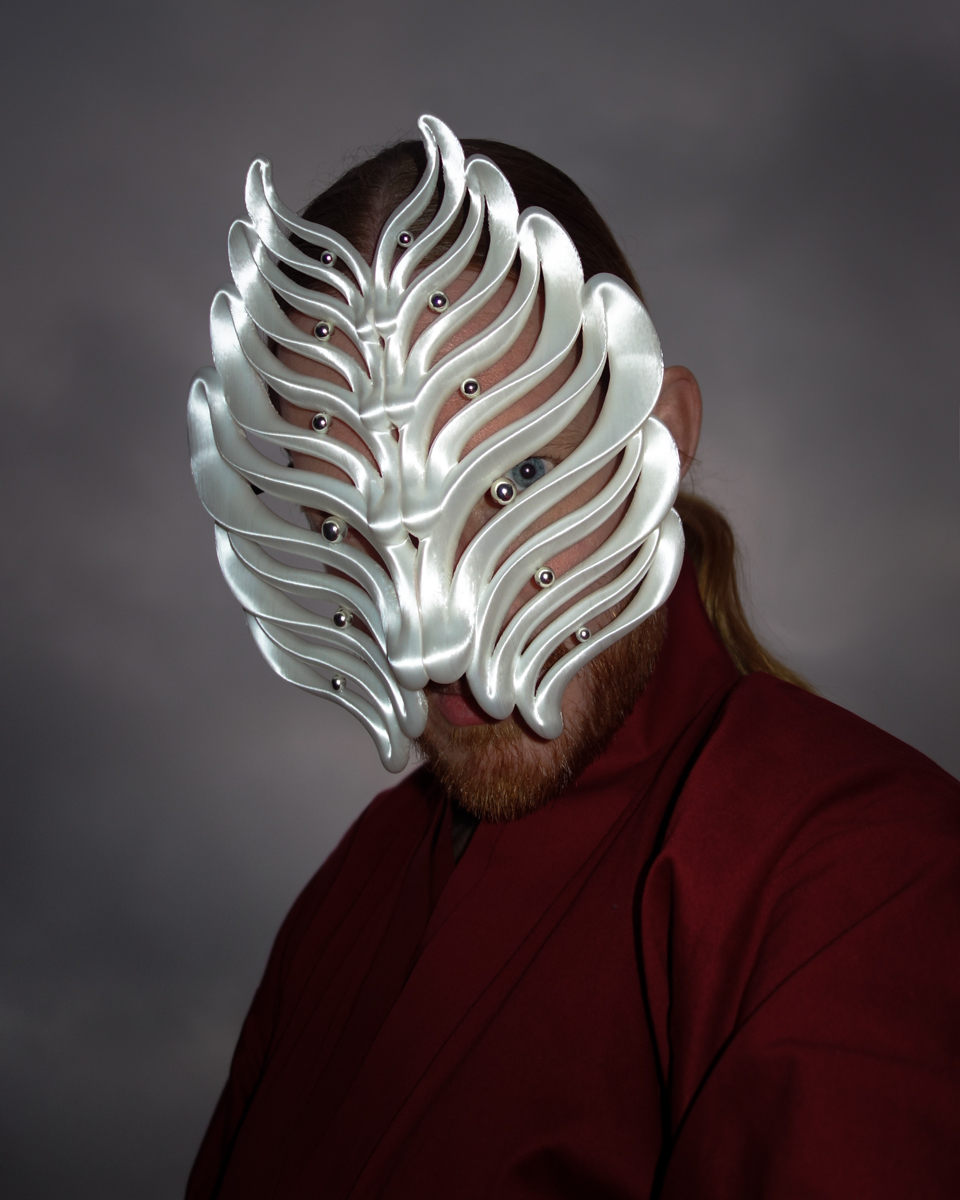
My work usually shifts between hand embroidery, metalwork, silversmithing, illustration, 3D sculpting and jewellery. I began as an embroiderer, and that sensibility remains the thread that ties all my other practices together. A lot of my metalwork, for instance, has a distinctly textile quality and I often use wire or silver as though it were thread, shaping it to float around the head in three-dimensional forms. I make each piece by hand in my small studio, situated at the bottom of my garden here in Iceland.
Moth Mask Photo by Santiago Felipe
Could you share more about the journey that has led you to be making masks for Björk?
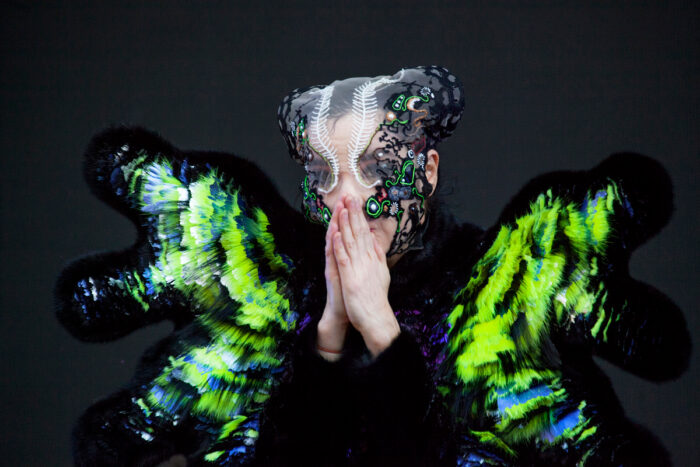
I met Björk in 2009, just as she was coming off the Volta tour and starting to formulate what would later become the Biophilia album. Initially, I joined her as sort of research / personal assistant, but over the years my role evolved to focus more on the visual side of stuff with her – whether it be tour visuals, music videos, making apps or virtual reality projects etc. In 2015, while we were working on the visuals for the Vulnicura album and tour, I started to make some embroidered masks for her to wear on stage. Most of those were made while we were on the road, initially just as a little side project – we were usually so busy working on other stuff during the day, I would make them in the evening in my hotel room. For a long time I saw them as these spontaneous physical flowers that would spring up out of all the other work we were usually doing during the day. So I was often surprised when people would call me her “mask maker” as that was initially a very small (but visible) part of our collaboration. Over time though, the masks became a more integral part of our creative partnership.
Nodens Mask
Could you talk us through the process of designing and creating one of her masks, perhaps a creation you have been especially proud of?
During the Covid lockdowns, I finally had the time to look back and archive all the masks I had made, and was amazed to discover I’d created over 70… and the process for each one is a bit different ! But typically, there will be some visual references or emotional cues that will emerge from conversations with Björk – or some inspiration from nature that I have become fixated on. And then I will just start experimenting and making prototypes in my studio – often for weeks or months, until I figure out some mood or character that works on the face. A lot will depend on what specifically I am making the mask for: if it is for a video, a live performance, a photoshoot – they all have slightly different parameters for how theatrical or casual they should feel, so that is usually at the forefront too. If we take one recent mask as an example – the “Fascia” mask, I had become very interested in the body’s connective tissue, and had been researching that for a while. Taking that as an initial starting point, I started to draw some contours directly onto a bust of Björk´s head, which I then abstracted into a series of organic flowing lines. Almost all of my previous masks have lifted off the face and floated around the head, as I was always wanting to avoid making a typical “mask” with eye holes that is worn flush to the face. This was my first attempt at trying to make a piece that could easily just be taken on and off like that. I ended up laser-cutting this piece from solid copper, polishing it by hand and then forming it to fit exactly onto Björk´s face. Björk had also been sharing references with me at the time that had this same sort of contour-line feeling – so this mask shows how often it is a strange combination of things that leads to any particular mask: an anatomical reference, some visual clues from Björk, a mixture of hand craft and digital techniques combined, a long process of experimentation with different forms… all of those will merge and a new mask will eventually appear out the other side! Watch the making of this mask here.
Fascia Mask
How do new ideas emerge for you and what is the process for developing them into finished pieces?
Most of my inspirations, unsurprisingly, come from the natural world — usually something botanical or anatomical, often something internal or microscopic that I want to try and bring to the surface. More recently I have been finding lots of inspiration in archaeological sites and finds, specifically from Iron Age Britain. Typically I will become fascinated by a particular form or structure, and start studying it obsessively for months, until I begin to see it as a character that could live on the face. I prefer to evolve the shapes beyond their origins, creating curves or structures in my own visual language – until I find something that suggests the essence of something, rather than a direct copy of its natural form. I will usually try to clear my mind of references entirely and go into the studio without a sketch, and let my hands do the thinking instead. In my practice I am often switching between different materials and techniques, and I find that approaching it this way lets me react more instinctively to whatever material I am using, until something new emerges.
Ophrys Ring Gold
Where do you hope to take your practice in the future and why?
I’ve recently launched my first pieces of jewellery at Dover Street Market in London, which feels like a very natural and exciting evolution for where I want to go next. Adorning the body has always been central to my work, but now I’m shifting my focus from the face to the hands, ears, necks, and wrists. I´m really proud of those first pieces – especially the fact that I made them in my hometown in Gloucestershire, with the amazing team at Pangolin Editions – a world class bronze foundry just a few steps from where I grew up. I wanted to keep the scale small and focused, prioritising craftsmanship and intention in every piece – and feel very lucky to have done that with them. It was the first time I gave my designs to someone else to make, and I already can’t wait to start making new pieces with them.
Please tell us about your journey into the world of art, design and craft, and the unique perspective you bring to it.
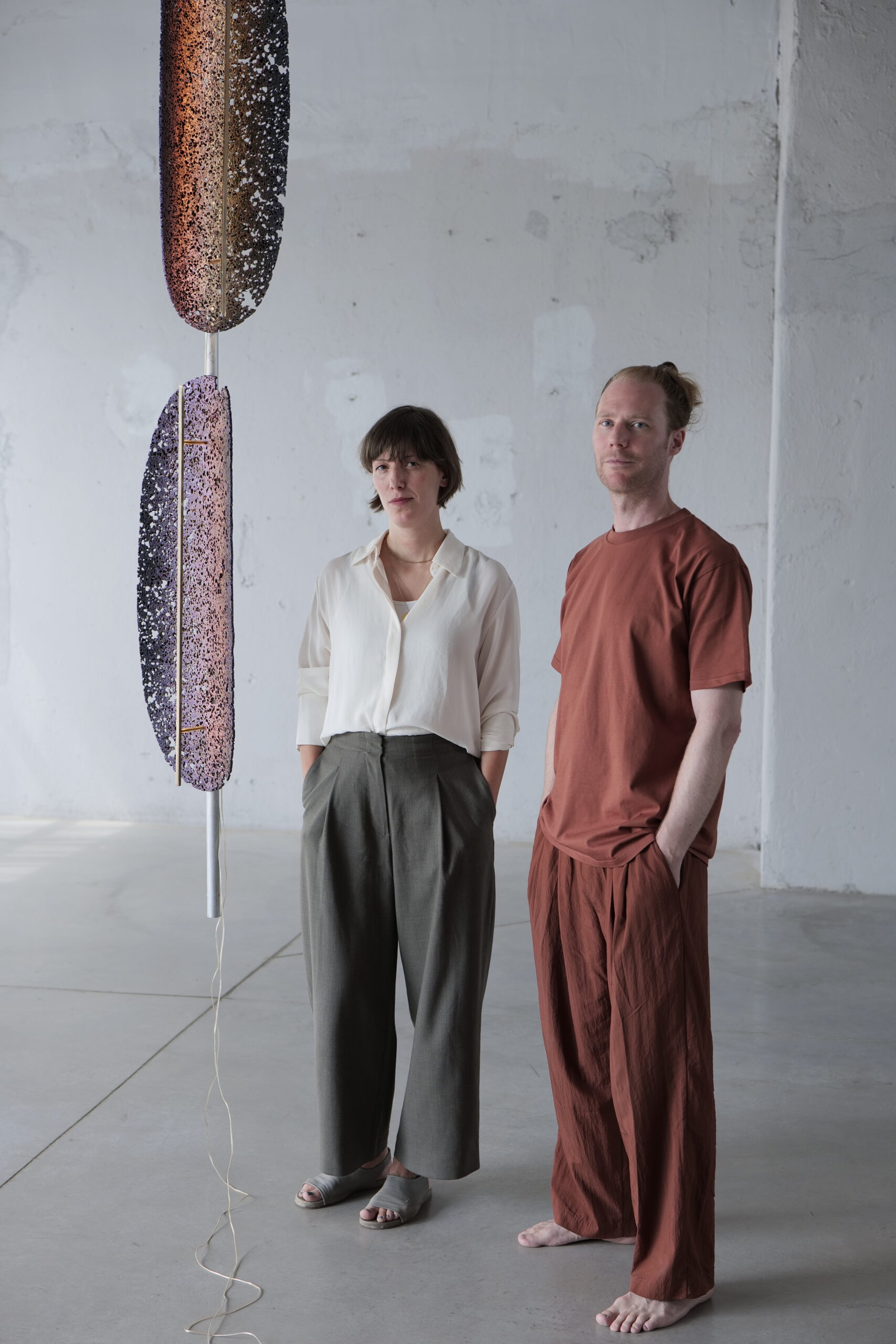
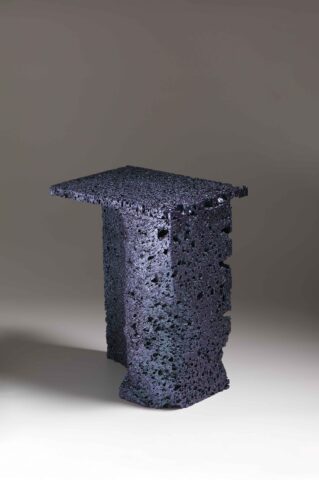
It was clear to me from a really young age before I knew what design or craft was, this is what I would do. It came into sharp focus over time and particularly during my RCA years. Marina and I started to collaborate soon after graduating and formalised our studio in 2015. Our work is deeply informed by processes that occur in nature such as lava stone from volcanic activity or how mountains are formed over many years. Nature creates the most beautiful forms, albeit uncontrolled, and this is what we try to achieve in our work. In traditional design there is a tendency to control and perfect every aspect of production and outcome but we try to create work with process and feeling. For us the outcome is a result and not an expectation.
Moon Rock
How do new ideas emerge for you and what is the process for developing them into finished pieces?
We both have intuitions which we tend to sketch or talk about. For us ideas are fast but we often work on longer projects like Moon Rock which took years to develop so many ideas can influence the outcome of a single project and a single project can have numerous outcomes. We produce drawings, material samples, models and collect lots of material that builds towards a collection of finished pieces. Moon Rock is ongoing so we will keep adding to the collection over time.
Which materials do you each enjoy working with most and why?
We are lucky enough to work with our own materials which we have created. They are not materials within their own right but rather variations of materials such as our metal and ceramic foams. We also love to work with glass, and light is something we treat as a material, an immaterial material, but something that can be worked and shaped nevertheless. We are drawn to transformative materials and materials which are enduring.
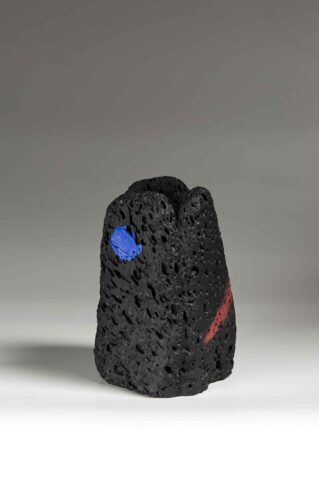
Black + Blue
We’d love to hear more about the inspiration for the Moon Rock project and how it feels to be sending artwork to the moon.
The Moon Rock project grew out of our ceramic foam work. We wanted to create furniture scaled work but our porcelain foam is better suited to hand scaled pieces so we started to explore the possibilities of creating our own metal foam process. We created the process first and looked at geological processes occurring in the natural world such as volcanology which forms and shapes planets all over the universe. Volcanoes are like massive crucibles that spew out weird and wonderful materials. There were many iterations of the process before we perfected it but then we took the steps to rework it so the outcome is 100% recycled from car wheels meaning no new material is required cutting out mining and around 90% of the energy required in the production of new aluminium.
Looking up at the Moon it all seems so far away and even hard to imagine someone setting foot on the surface let alone imagine something I made will go there and be preserved for a very long time. But I have come to think of it like Everest, there was a time before anybody set foot on the summit and one afternoon that changed. Now in climbing season long queues of people wait their turn to summit. Soon the Moon will be a busy place, probably sooner than many of us expect and I think that’s the point. We created a cobalt porcelain hybrid material and produced a tiny Moon Rock table for the occasion.
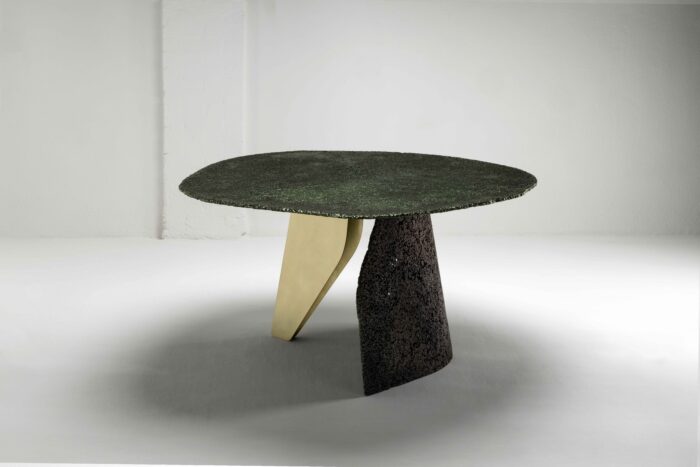
Diode Dining Table | copyright Charles Burnand Gallery 2024 | Photo: Graham Pearson
Where do you go from there? What will you be working on next?
We are presenting our work on a global stage now with PAD London and Design Miami coming up soon for example. It’s invigorating to experience how new audiences interpret our work. We are creating larger scale pieces and have some bronze foam pieces also. We are most excited about what’s going on behind the scenes. As well as a shift in scale we are thinking about some more advanced processes to form the next generation of our work.